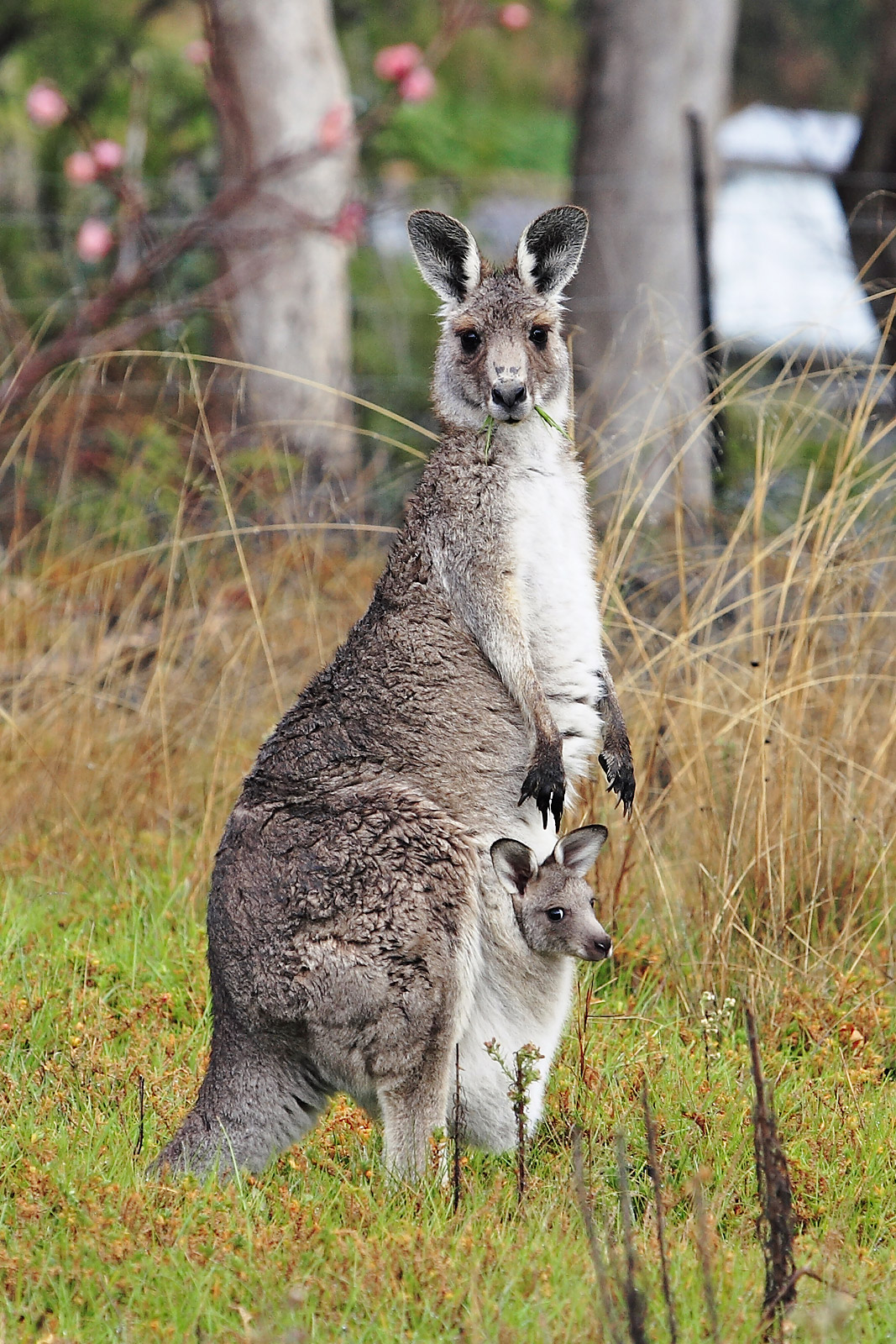
The Australian Icon
Kangaroo
Marsupial mammals of the family Macropodidae. Found in Australia and New Guinea.
~65Species
30+Million years
2mMax height
Marsupial mammals of the family Macropodidae. Found in Australia and New Guinea.
The word kangaroo derives from the Guugu Yimithirr word gangurru, referring to a grey kangaroo. Captain James Cook's journal entry from 1770 is the first recorded use of the word.
The term is used informally to refer to any macropod, though specifically refers to the largest species: the red kangaroo, eastern grey kangaroo, and western grey kangaroo.


The term "wallaby" is informal and generally refers to smaller macropod species. However, some larger species like the wallaroo are intermediate in size. The distinction is not taxonomically meaningful but persists in common usage.
Kangaroos are the only large animals that use hopping as their primary gait. They can reach speeds of 70 km/h and jump 3m high.
Herbivores grazing on grasses, leaves, and shrubs. They are selective feeders, preferring plants with high protein content.
Unlike ruminants, kangaroos don't produce methane during digestion. Their unique gut bacteria offer potential climate solutions.

Kangaroos have a unique reproductive strategy. After a short gestation (30-36 days), the tiny newborn (called a joey) crawls into the mother's pouch where it continues developing for 8-9 months.
The joey eventually emerges but continues to nurse for several more months. Female kangaroos can have three joeys at different developmental stages simultaneously.
Kangaroos live in groups called mobs, typically consisting of 10-30 individuals. They have a complex social hierarchy with dominant males leading breeding groups.
They communicate through foot thumping (a warning signal), hissing, and clicking sounds. Males engage in boxing contests for mating rights.

Large hind legs with elastic tendons for efficient hopping
Strong tail used for balance and as a fifth limb
Powerful forelimbs with sharp claws for defense
Natural predators include dingoes, eagles, and goannas. However, the biggest threat comes from humans through vehicle collisions and habitat loss. Kangaroos have adapted to avoid predators primarily through their excellent hearing and hopping speed.
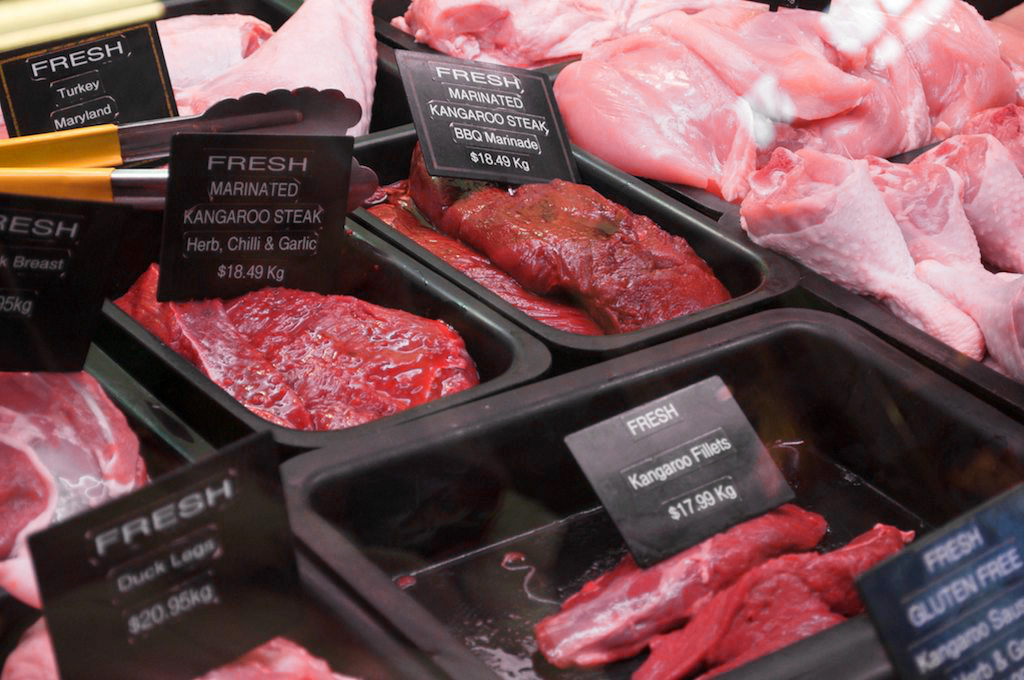
Kangaroo meat is lean, high in protein, and low in fat. It has been consumed by Indigenous Australians for tens of thousands of years. Commercial harvesting for meat began in the 1950s.
Today, kangaroo meat is sold in Australian supermarkets and exported internationally. However, it remains controversial due to animal welfare concerns and the species' cultural significance.

Kangaroo-vehicle collisions are a major issue in Australia, causing millions of dollars in damage annually and posing road safety risks. The Australian government estimates over 100,000 kangaroo-vehicle collisions occur each year.
Mitigation measures include wildlife crossings, fencing, and driver awareness programs. Kangaroo warning signs are common on rural roads.

The kangaroo appears on the Australian coat of arms, the Australian dollar, and numerous government and commercial logos. It represents Australia's unique wildlife and national identity.
The kangaroo and emu were chosen for the coat of arms because both animals are native to Australia and cannot walk backwards — symbolizing forward progress.


From the Kangaroo brand of computers to the boxing kangaroo on Australian sports teams, the kangaroo remains an instantly recognizable symbol of Australia. It appears in films, advertisements, and as the mascot for numerous organizations.